Posted: 05/03/2026
Endometriosis Awareness Month 2026
Reading Time: 4 minutes
Endometriosis awareness month 2026 takes place in March to raise awareness of this condition, which is widely misunderstood in spite of affecting 1 in 10 women worldwide. This condition can be life changing, causing women to suffer with extreme symptoms both physically and emotionally and can affect their reproductive health.
What is Endometriosis?
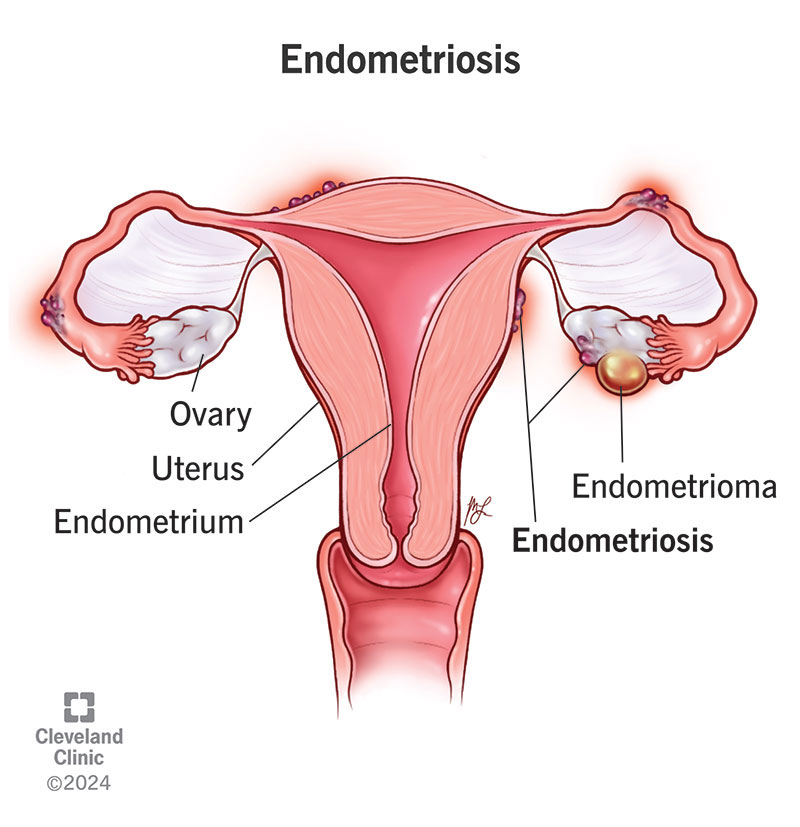
This is a condition where endometrial tissue, typically found in the lining of the uterus, grows outside of the uterus. This can be found on the ovaries, fallopian tubes and other surfaces of the uterus. It can also be found to be on other organs in the pelvis including the bladder and the bowel.
Each month, the endometrial tissue in the uterus sheds (known as the typical women’s menstrual cycle); however, for those with endometriosis, the tissue in the abdomen cannot exit the body in the same way. This therefore leads to inflammation, pain and causes adhesions (scarring).
It is not known why the tissue grows in the wrong place and this is something that is being extensively researched to understand why this happens.
Common symptoms:
Common symptoms of endometriosis can include:
- Painful periods (dysmenorrhea): although a lot of women experience pain when menstruating, those who suffer from endometriosis can experience significant pain, often beyond typical menstrual cramps and which can become progressively more severe over time.
- Chronic pelvic pain: Those who suffer from endometriosis may experience pelvic pain throughout their whole menstrual cycle, not just during their period.
- Pain during intercourse: pain during or after sex is another common symptom of endometriosis.
- Irregular or heavy periods (menorrhagia): Endometriosis can cause prolonged or very heavy menstrual bleeding, or even bleeding between periods.
- Fatigue and digestive issues: Many women report feeling excessively tired and may also experience bloating, nausea, and digestive discomfort.
- Pelvic pain on opening bowels (dyschesia): This occurs in rarer cases where the bowel is involved. Less commonly, endometrial tissue can cause adhesions to
- the bowel which can cause abdominal swelling and bleeding from the rectum. It can sometimes cause bowel obstruction.
- Pelvic pain on passing urine (dysuria): This occurs in rarer cases where the bladder is involved.
- Referred pain to the tops of the legs or back.
- Infertility/subfertility: due to the nature of endometriosis, damage can occur to the ovaries and fallopian tubes, which can therefore affect fertility, making it harder for some women to get pregnant naturally.
Diagnosis
Diagnosis of endometriosis can take time; the diagnostic process can be made more challenging by the fact that some of the symptoms of endometriosis can be found with other conditions such as IBS (irritable bowel syndrome) or PID (Pelvic inflammatory disease). It is however important for medical professionals to consider endometriosis as a potential diagnosis, as earlier diagnosis and treatment of endometriosis can result in a better outcome. There are stages for endometriosis from stage 1, which is a small amount of endometriosis and is generally more straight forward to treat, to stage 4 which is the most severe, often involves spread elsewhere, such as to the bladder and bowel, and is more complex to treat.
When endometriosis is suspected, laparoscopic surgery is the best way to confirm a diagnosis. This is a procedure where a small camera is inserted into the abdomen to directly visualise the endometrial tissue and take biopsies. On some occasion, during the laparoscopy, the consultant/surgeon will perform diathermy to remove some of the endometrial tissue and provide some relief of symptoms. Although an ultrasound scan / MRI scan can suggest that endometriosis present, a negative ultrasound or MRI does not necessarily rule out endometriosis.
Treatment and management
Because endometriosis is a condition that has no cure, the focus is upon treating and managing the symptoms which all work differently for everyone. It is common for individuals to be placed on hormonal treatment to suppress the growth of the endometrial tissue along with pain medication (including ibuprofen and naproxen).
Surgery can help those with severe symptoms as it can remove or destroy the endometrial tissue and this in turn can assist in relieving pain and improving fertility chances.
There are also recommendations on lifestyle changes to help improve symptoms and overall health. These include diet changes, such as reducing the intake of processed foods, sugars and trans fats, which can be beneficial in reducing inflammation, and reducing stress, which can increase pain and fatigue.
At Williamsons Solicitors we have experience in claims relating to a delay in diagnosis and treatment of endometriosis and see too often how women suffer due to negligent delays in diagnosis and treatment. If you feel that you have suffered a delayed diagnosis and have suffered a worse outcome as a result of this, please contact our Compensation Department on 01482 323697 to discuss how we can help.
FRIENDLY, EFFICIENT LEGAL ADVICE
We’re ready to chat when you are
Drop us an email or give us a call for a no obligation chat to see if we can help.