Posted: 22/09/2026
Martha’s Rule in A&E
Reading Time: 3 minutes
Media coverage this week has focused on how Martha’s Rule is being extended into Accident & Emergency (A&E) and what this means for patients and families who feel a patient’s deterioration is being missed.
Our previous article titled ‘Martha’s Rule’ has previously explained why Martha’s Rule matters for patient safety and why it is closely linked to recurring themes in clinical negligence—particularly failures to recognise deterioration, failures to escalate, and breakdowns in communication.
In our earlier article, we highlighted that it aims to rebalance patient voice and clinical decision-making, described as “a shift in the balance of power away from a passive deference to doctors and towards patients being able to get that second opinion.”
What Martha’s Rule is (and what it is not)
According to NHS England’s guidance, Martha’s Rule is designed to ensure patient and family concerns about deterioration are heard, and, if concerns remain after speaking to the care team, patients and families can call a dedicated telephone number to request a rapid review from a different team.
It is also important for A&E teams and patients to understand NHS England’s clarification that “Martha’s Rule is not a second opinion” in the traditional sense (i.e., seeking another clinician’s view after a diagnosis or treatment plan); instead, it is an escalation mechanism for suspected deterioration and unmet safety concerns.
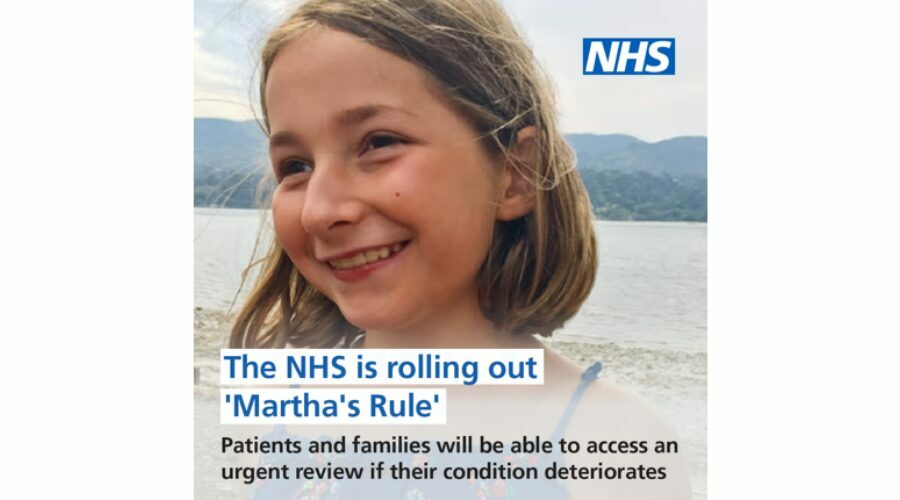
Martha’s rule has three core components: (1) daily patient input on whether they are improving/worsening and structured action, (2) staff access to review by a different team at any time if deterioration concerns are not being addressed, and (3) a patient/family escalation route that is advertised across the hospital.
Why A&E is a high-risk environment for “missed deterioration”
A&E is uniquely pressured: high patient flow, rapid triage decisions, crowding, frequent handovers, and competing priorities. In clinical negligence claims, A&E settings commonly generate allegations around:
- Delayed assessment / delayed review despite red flags
- Inadequate monitoring or failure to repeat observations
- Failure to act on family concerns (or to document them)
- Failure to escalate to senior decision-makers or critical care outreach
- Discharge too early without safety-netting or an appropriate differential diagnosis
Martha’s Rule is intended to give an additional safeguard when patients, relatives, or staff believe deterioration is being missed, particularly where conventional escalation routes are not working.
NHS England describes the dedicated-number model as a way to access a rapid review from a different team when concerns are not being addressed. The National Director of Patient Safety, Professor Aidan Fowler, at NHS England, stated: ‘A&Es see some of our most vulnerable patients, so the ability to raise concerns about deterioration quickly and trigger a rapid review of care is essential.’
Central to it is the right for patients, families and carers to request a rapid review if they are worried that a patient’s condition is getting worse, and their concerns are not being responded to. The initiative gives patients, families and staff a formal route to trigger an urgent review when someone in hospital seems to be getting worse.
FRIENDLY, EFFICIENT LEGAL ADVICE
We’re ready to chat when you are
Drop us an email or give us a call for a no obligation chat to see if we can help.